
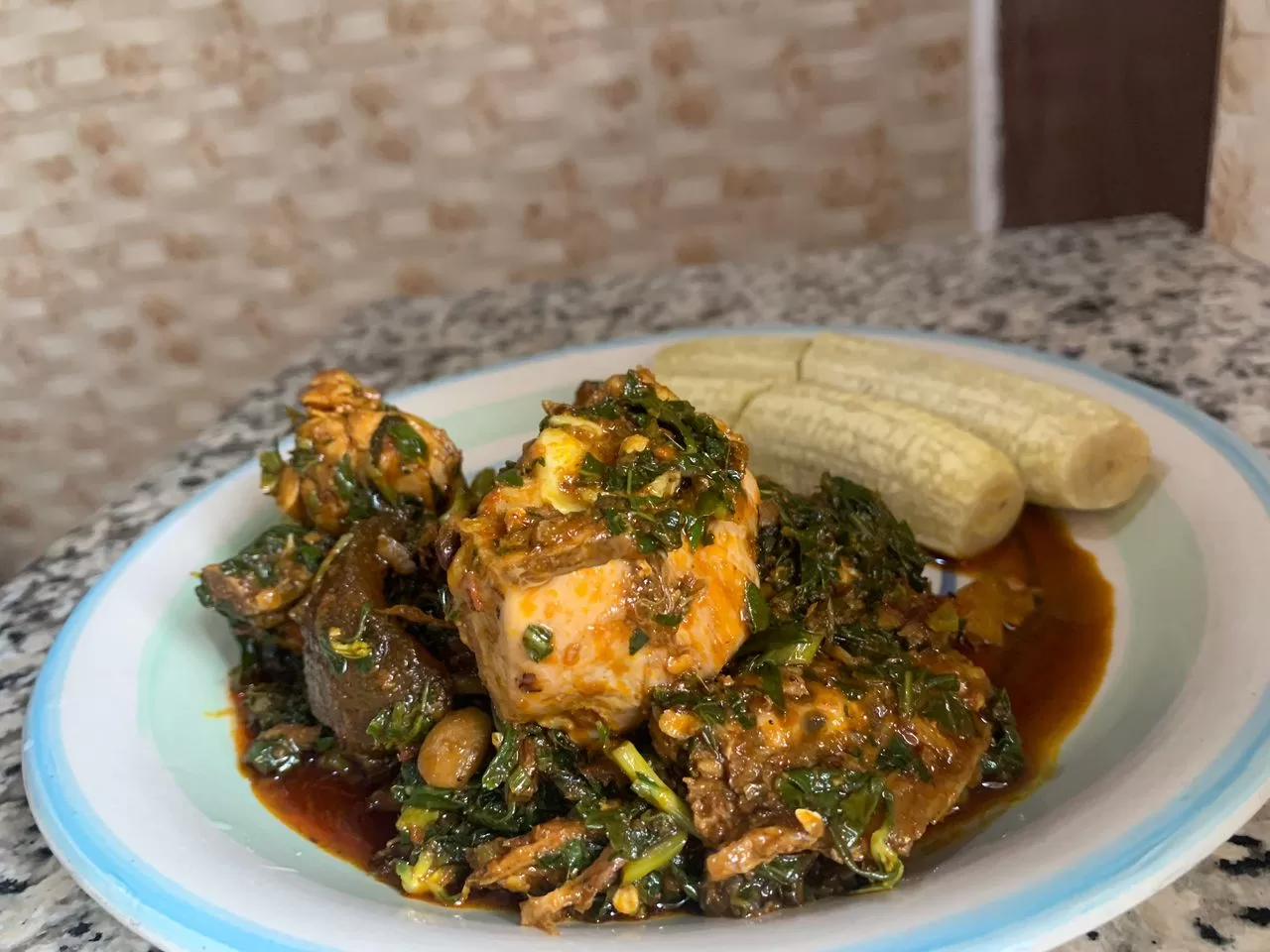
A candid collaboration review by Adunni for Melting Lemon Drop
Hey food lovers! Adunni here, and today I’m bringing you something a little different. You know me – I keep it real in the kitchen, and today I’m reviewing one of my own older recipe videos for boiled plantain and vegetable sauce. Yes, you heard that right! I’m critiquing myself because growth is everything, and honestly, there are some cooking details we all tend to overlook when making this beloved Nigerian vegetable sauce recipe.
This isn’t about being mean or overly critical – it’s about sharing those little secrets that transform a good dish into an absolutely mouth-watering experience. So grab your favorite drink, settle in, and let’s dive into this honest plantain and vegetable sauce review together!
Why This Nigerian Classic Deserves Our Attention
Now, I know what you’re thinking: “Adunni, it’s just boiled plantain and vegetable sauce – how complicated can it be?” Trust me, I used to think the same way! It seems like the easiest thing in the world – just throw some plantains in water, fry up some vegetables with palm oil, and boom, dinner is served.
But here’s the thing about Nigerian cuisine that I’ve learned over the years: it’s in those “simple” dishes where the magic really happens. The difference between good Nigerian vegetable sauce and absolutely incredible vegetable sauce lies in the details that most of us skip, overdo, or completely underdo.
Breaking Down the Recipe: What Worked and What Needed Work
The Ingredients List: A Promising Start
Let me tell you what I loved about the original video – the ingredient selection was spot on! We had:
- Palm oil (though we’ll talk about this later!)
- Fish stock and dried fish
- Cow skin and chicken
- Pumpkin leaves and water leaves
- Beef and stockfish
- Locust beans (dawadawa)
- Fresh plantains
- Pepper mix with scotch bonnet and onions
- Salt and seasonings
The vegetable combination was absolutely brilliant! Mixing pumpkin leaves with water leaves? Chef’s kiss – these vegetables are basically family, they love each other and combining them creates this beautiful depth of flavor that single vegetables just can’t achieve.


The Palm Oil Situation: Let’s Keep It Real
Okay, here’s where I had to pause the video and just… breathe. The palm oil quantity had me shook! Listen, I love palm oil as much as the next Nigerian, but honey, this is vegetable sauce, not vegetable-and-palm-oil soup!
When you’re making Nigerian vegetable sauce recipe, your palm oil should enhance the vegetables, not overpower them. We want to taste those beautiful greens, not swim in oil. So please, for the love of good food, let’s reduce that oil quantity in our future cooking adventures.
The Stockfish Strategy: Timing Is Everything
Here’s a boiled plantain cooking tip that extends to the sauce: stockfish needs time, people! This fish is strong, it’s got character, and it needs to mingle with every other ingredient from the very beginning of your cooking journey.
In the original video, the stockfish was added a bit late in the game. But stockfish should be the first guest at your cooking party – it needs to have a conversation with every single ingredient that’s going into that pot. Some home cooks even blend their locust beans for a smoother texture, which is totally fine if you don’t like seeing those little bits.
The key is building layers of flavor, and your aromatics (like locust beans and stockfish) are the foundation of that flavor house.

The Vegetable Cooking Controversy: 3 Minutes Is Not Enough!
Alright, this is where I had to hit the pause button and really think. The original video cooked the pumpkin leaves for one minute, then added water leaves and cooked everything together for just two more minutes. That’s three minutes total for the vegetables, y’all!
Now, I’m all for preserving nutrients – we definitely need all the good stuff we can get from our vegetables. But cooking vegetables for just three minutes? That’s going to give you that harsh, grass-like texture that nobody wants in their Nigerian vegetable sauce.
Finding the Sweet Spot
Here’s the real talk on boiled plantain cooking tips that applies to vegetables too: you don’t want overcooked, and you definitely don’t want undercooked. You want that perfect middle ground where:
- The vegetables have lost their raw edge
- They still maintain some texture and nutrients
- They don’t sound like you’re chewing grass when you eat them
- They’ve absorbed all those beautiful seasonings
The exact timing depends on your heat level – are you cooking on low, medium, or high heat? But regardless, give those pumpkins leaves a bit more love. They’re not as delicate as water leaves, so they can handle a longer cooking time.
The Seasoning Secret Nobody Talks About
Here’s something the original video missed, and it’s a game-changer: vegetables are seasoning sponges! When you add your chicken cubes, salt, and other seasonings at the beginning, and then you add your vegetables, guess what happens? Those greens absorb everything!
So here’s your pro tip: taste your vegetable sauce after adding the vegetables and cooking them. If it needs more seasoning, add just a little bit more. Don’t go crazy – remember, you can’t take seasoning out once it’s in – but don’t be afraid to adjust the flavor to match your taste buds.
The Great Plantain Debate: Ripe vs. Unripe
In the original video, unripe plantains were used because of their lower sugar content, which is great for people managing diabetes or just wanting to cut down on sugar. The cooking time was about 5 minutes, which is perfect for unripe plantains.
But can I share a secret with you? If you’re not dealing with dietary restrictions, ripe plantains are absolute magic with vegetable sauce! Here’s why:
- They cook faster (about 2-3 minutes instead of 5)
- They’re naturally sweeter
- They have a softer texture that’s easier to enjoy
- The sweetness creates this beautiful balance with the savory vegetable sauce
If you’ve never tried ripe plantain with your Nigerian vegetable sauce recipe, please do yourself a favor and try it. Your taste buds will thank you!
The Final Verdict: Room for Improvement in a Great Dish
Despite my critiques, let me be clear: the final dish looked absolutely delicious! The vegetables had this beautiful, appealing color, and I could almost taste how good it would be. The concept was solid, the ingredient choices were smart, and the presentation was lovely.
The areas for improvement were really about:
- Oil quantity – less is more with palm oil in vegetable sauce
- Cooking time – give those vegetables a bit more time to develop properly
- Stockfish timing – earlier is better for maximum flavor impact
- Seasoning adjustment – taste and adjust after adding vegetables
Why I’m Sharing This Review
You might be wondering why I’m being so candid about my own work. Here’s the thing: cooking is a journey, not a destination. Every time we step into the kitchen, we have an opportunity to learn something new, to improve, to grow.
Whether you’re in Nigeria, the US, India, or anywhere else in the world, the principles of good cooking remain the same. It’s about respecting your ingredients, understanding how they work together, and never being afraid to adjust and improve.
Your Turn to Cook: Tips for Success
Ready to try your own boiled plantain and vegetable sauce? Here are my top tips:
For the Sauce:
- Start with stockfish early in the cooking process
- Use palm oil moderately – enhance, don’t overpower
- Cook pumpkin leaves longer than water leaves
- Taste and adjust seasoning after adding vegetables
- Aim for texture that’s cooked but not mushy
The Plantain:
- Choose ripe plantain for sweetness (if no dietary restrictions)
- Unripe plantain works great for lower sugar needs
- Don’t overcook – you want tender, not mushy
- A pinch of salt in the cooking water makes a difference
For the Complete Experience:
- The vegetables should complement each other, not compete
- Build flavors in layers, starting with your aromatics
- Trust your taste buds – they’re your best cooking tool
Let’s Keep the Conversation Going!
What do you think about my review? Did I go too hard on the original video, or was I spot on? Have you tried making Nigerian vegetable sauce recipe before? What challenges did you face?
I genuinely want to hear from you! Whether you agree with my critiques or think I missed the mark completely, your perspective matters. After all, cooking is about community, sharing, and learning from each other.
Ready to see the full review in action? Head over to my collaboration with Melting Lemon Drop on YouTube, where you can watch the complete video review and see exactly what I’m talking about. Don’t forget to like, subscribe, and share your own cooking experiences in the comments!
Watch the Full Review: I Can’t Believe I Made This 😅 | Boiled Plantain & Veg Sauce Throwback w/ Adunni
Subscribe to our channel for more honest cooking reviews, authentic Nigerian recipes, and the kind of real talk that actually helps you become a better cook. Because at the end of the day, we’re all just trying to create delicious food that brings joy to our tables and our hearts.
Happy cooking, food lovers! See you in the kitchen (and in the comment section)!
Subscribe to Melting Lemon Drop: https://www.youtube.com/@meltinglemondrop2283
Footnote

Here’s the real talk- I wish I could have tasted that dish
And I wish you could have tasted our samosas or coconut spring rolls
Having said that, I understand you wish for less of palm oil in rabadi
And more of vegetables. So be it for the time being
Buying vegetables is a problem for some and so we tried a simple mantra-
Coconut first and helping our friends try something sweet
With something savoury perhaps later this month.
In the meantime, hope you get to go out with somebody
Who may be working with a faulty laptop battery
Unfortunately, we live in times of distress
With hardly any power or electricity
And what we save during the day, helps to light up the night
Thanks for being a bright beacon of light
We will continue with this good fight. 🙂
Melting Lemon Drop 28.09.2025

2 comments
This is a good read
Yes. I think so too! Remarkable coincidence.