
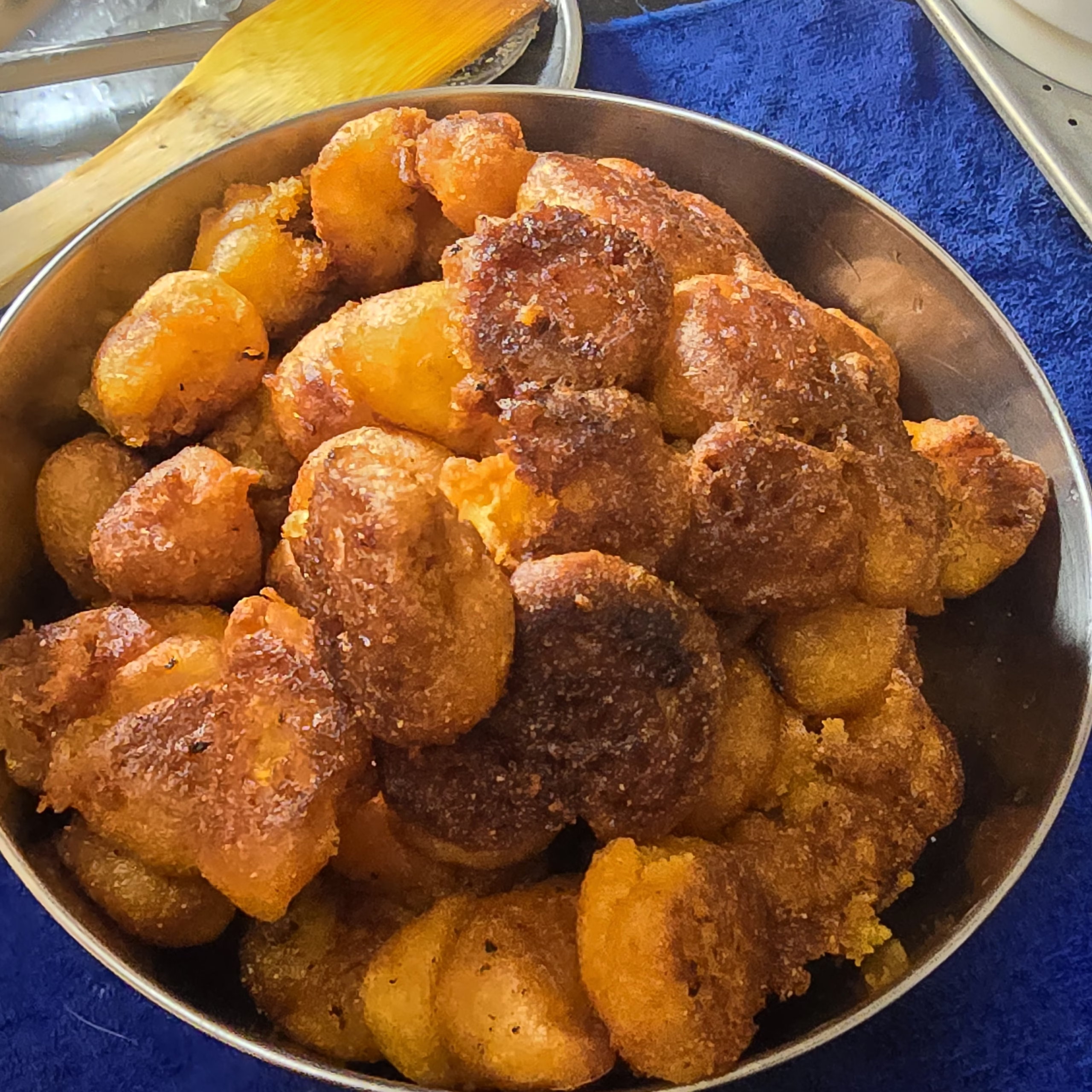
What’s Taal er Bora? First things first. What’s Taal? It’s actually a fruit from the palm family. A simple search informs me that its called Palmyra Palm or also called Toddy Palm. This is the right season for Taal and I saw the local markets full of taal fruits being sold. This is another very peculiar local seasonal fruit. Rarely found in many supermarkets. Perhaps less rare than kath bel which I had rediscovered earlier this year.
The pulp from the fruit is used to make various things including toddy. But I know it more for the special seasonal delicacies like Taal er bora. It’s a sweet fritter made by mixing the pulp extracted from the palmyra fruit with flour, coconut and sugar. I actually like taaler kheer more which is made by cooking this pulp with milk, coconut and sugar. It’s sweeter and definitely has a stronger concentrated fragrance of the fruit.
Before you get super excited about this exotic fruit, let me warn you that the fragrance is pretty strong and has an overpoweringly heavy sweet pungency- almost like rotten bananas.
Perhaps has a whiff of other strong tropical fruits like ripe jackfruit or maybe Durian (not that strong). So, it’s one of those things which you either hate or love.
If you haven’t tried it before, you should definitely check for yourself. There’s an intoxicating element to it and the fermented toddy from this fruit is pretty popular during the monsoon season. I haven’t tried that here- so can’t say much except that I’m told it packs quite a punch.
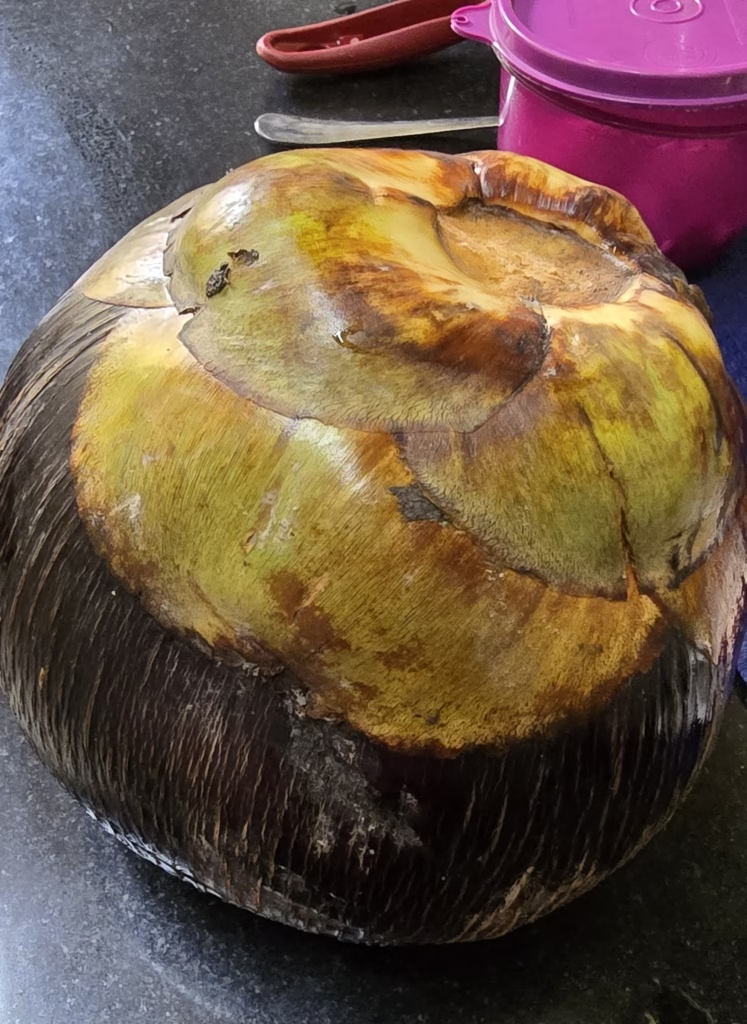
Taal er Bora for Rakhi and Janmashtami
For many of us we saw others making these during festive occasions in this monsoon season- especially Raksha Bandhan (Rakhi) and Janmashtami which is just around the corner. I remembered that last year I spent Rakhi with my friends in Stamford. And I don’t remember doing anything special for Janmashtami which is Krishna’s birthday celebrations. Onam is also happening (very important festival in Kerala) right now but I don’t know if they have taal there.
Frankly, there’s a bit of a heavy air this year with so many deep losses in my family and friend’s circle. I don’t feel like celebrating much. But there’s always the counter point that you should celebrate life anyways. Celebrate even the lives of the people who are gone.
So, we move on and anyways we have to eat. We might as well eat some good food.
I’m making this taaler bora for the first time. Strictly speaking, I’m actually taking lessons on how to make this.
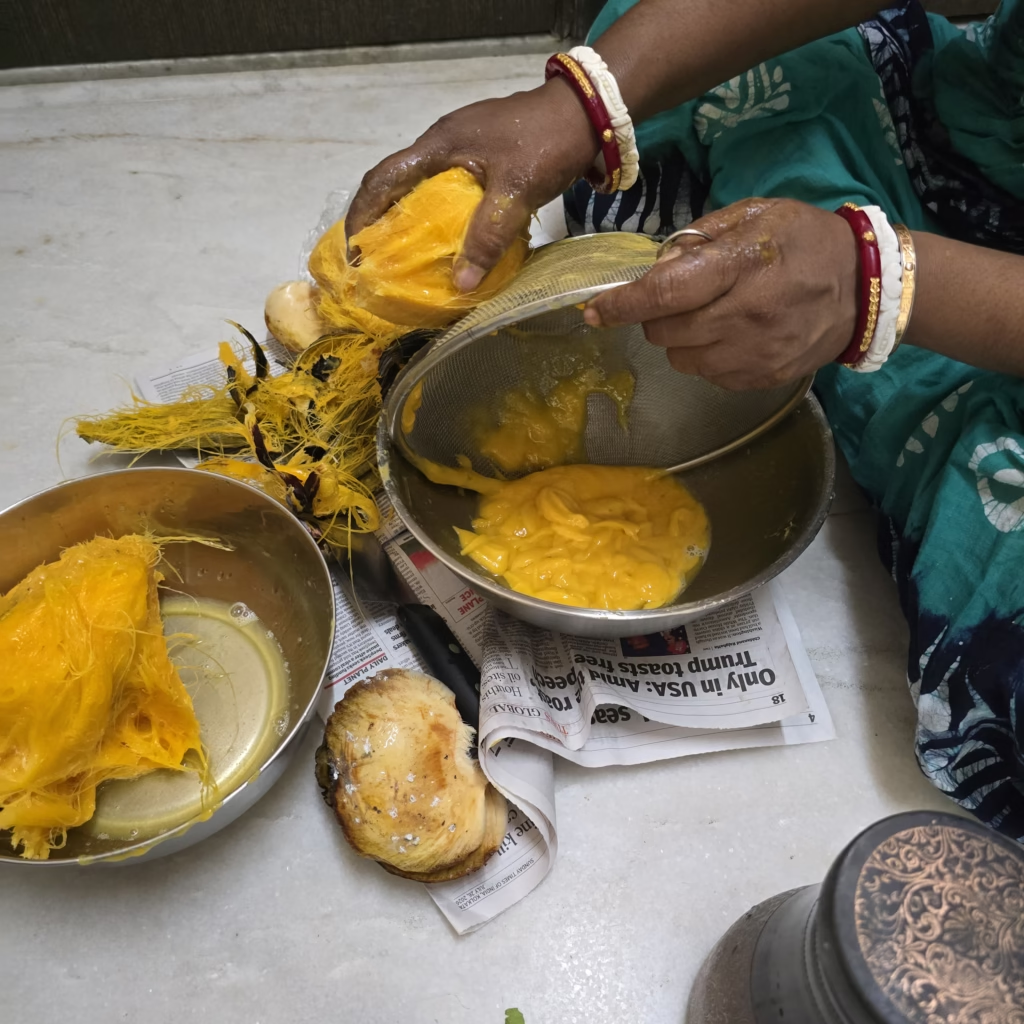
My helper, Sandhya is an expert at it.
My mother made it a week ago and that’s when I thought, I should finally learn how to make it. I was surprised to see her making it.
It’s a pretty labour intensive process and at her age, literally back breaking. I felt bad seeing her making it but she derives a lot of joy from making these and distributing to others.
Taal er Bora to mark small wins
I was waiting for 2 things before I could embark on this culinary experiment.
First, my ill-fated misadventures with transferring the gas connection to new city needed to be concluded. Thankfully, that finally happened after 2 months of my shifting.
The transfer letter came after I went through a big song and dance to return the previous cylinder. Then I had to fill up a bunch of forms and finally do the ekyc at the agency. All of this took many trips, many calls to a helpful neighbour in previous city and a lot of time and money wasted. I wish I had a magic wand that could have made this process easier, faster and cheaper.
But anyways, it was done and I had a huge sense of relief and accomplishment once I saw that cylinder at home. I could finally start cooking with it again! 🙂 I was keen to share some more with my family and friends who have fed me recently or over the years.
On a side note, last time I got the gas connection- they gave me an apron, a regulator, a gas pipe and a cylinder stand along with the cylinder. This time I noted they gave me an extra pipe and a fire extinguisher. Suddenly remembered, I don’t know how to use the fire extinguisher. I should have asked the delivery guy to show me.
Taal er Bora to break a cycle of fear
Second thing I wanted to clear up was this niggling worry about my sugar levels. I have a huge weakness for desserts. I have deliberately avoided posting too many recipes here. Have put very simple ones.
I am not diabetic but with a family history of diabetes, I am always careful. My autoimmune disorder related symptoms (psoriatic skin flare ups and joint pains) have surfaced again over the last 3 months. A health checkup was overdue. Initial blood reports showed at least sugar and cholesterol levels are fine. So, I thought, why not do this sweet fritter to celebrate going over that small hurdle. 🙂
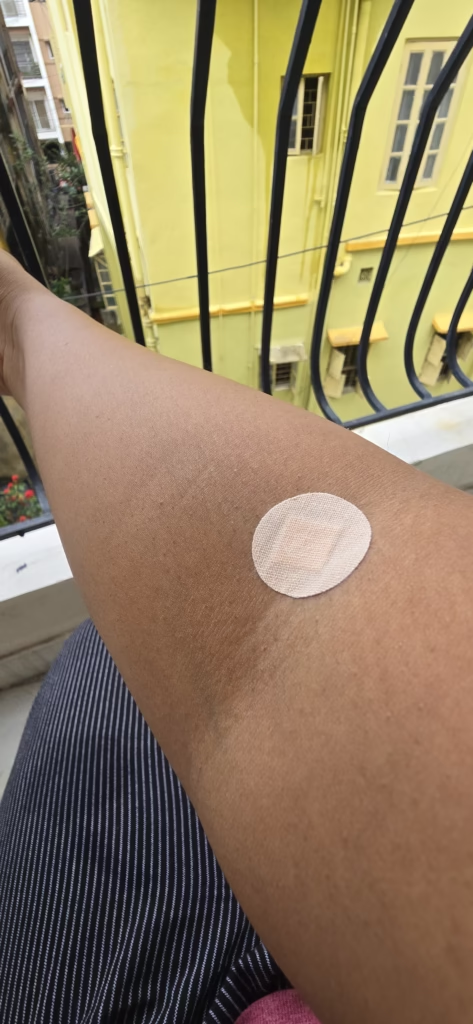
While I was booking the blood test online, I found surprisingly many AI generated articles about frauds in online transactions and websites. Might be a coincidence but I really double checked each step to make sure this one was not a fraud.
I had used their services before, so I was pretty sure, it wouldn’t be a hoax. But nowadays there are many duplicate websites with the same name and sometimes you don’t know whether the first link after your search gave you the correct site. Small points but always good to call and doublecheck.
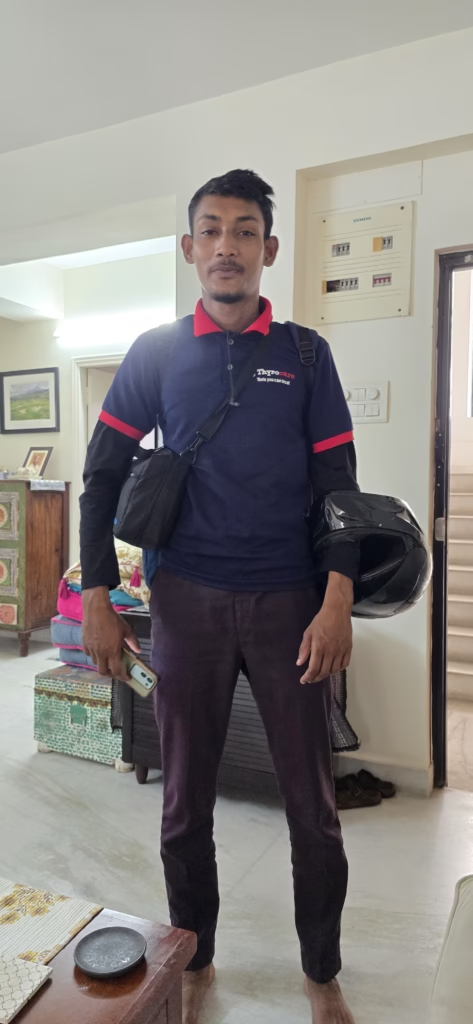
The person assigned for the sample collection was a very young guy who took the samples, collected the payment and did the admin work on his mobile phone that enabled the processing of the customer (patient) details. He explained how everything was sanitized and how the reports would be delivered online and in hard copy.
Definitely very easy and convenient. But now I need to take the reports to a good doctor.
Missing quite a few people as I eat them
In our Hindu mythology there’s an accountant called Chitragupta who keeps a record of all deeds and misdeeds. He’s not a jolly guy like Santa Claus. And I can’t write letters to him.
I read online a few narratives of what people would have changed most in life. Do I have regrets? Sure, I do. But I can’t go back. Chitragupta is recording everything and there’s going to be a tough PIP later. So, we believe whatever you didn’t get right in this life, you have to carry forward as lessons in the next life.
Looks like I’m carrying forward a lot from my past. I’m trying to minimise the load to the next one. Escape from this continuous cycle is only possible when you have nothing to carry forward.
Given that I have been really cruel to others (as branded now suddenly), I have to repeat this cycle of rebirth. Only thing that I know is that we all experience life differently. So, sharing helps.
Kind of like we are all students in a class and we exchange notes. I learnt that the taal was sweet because it had three aathis (seeds) inside. Sandhya told me that the fruit with two seeds turns out to be bitter. I trust she knows her taals.
My note for this particular class is that I couldn’t stop eating these delicious boras. But I felt really heavy later. 🙂 Nothing new there. It makes sense to share your sweets and your good fortunes with others.
Important for Taal er Bora
Important thing to note is that you have to take the pulp and process it quickly to make the boras. If you leave it for too long it gets bitter.
Sandhya took 2 hours out of her afternoon siesta to help me do this. I was told the fresh juice from the fruit can be left to ferment for making the toddy. Reminds me of the drink I had in a small canteen in Kochi.
It was quite delicious and I slept very well after that drink.
Now, here’s the thing. I can’t be talking about Raksha Bandhan, Janmashtami and toddy at the same time. Doesn’t sound right (?). The idea is to let the fruits ripen. And use them to make these sweets so that everyone can enjoy- including kids and elders. Makes sense. Happiness shared, multiplies?
I was told by my yoga teacher that you can also make soft rotis with the taal pulp. Just knead it and make a dough with atta (whole wheat flour). I am curious how that would taste. I am imagining it like puranpoli. How about making small pancakes with them? And drizzle them on top with a bit of liquid gold patali gur (date palm sugar) and big dollop of nolengur icecream. That would be decadent!
Ok, that’s enough of daydreaming for now. 🙂 I’m leaving a few kitchen experiments and creative cooking exercises for others to try later. Just a few ideas left here and there in case somebody likes to pick up seashells from the seashores.
Taal er Bora has no ADA
I was thinking about how to infuse some Attitude, Desire and Attractiveness (ADA) into this humble fruit based sweet. Have you read many grandiose paeans to different foods by food writers and critics across the world? 🙂
It needs to be lifted up through a romancing of the fruit first and the maker. I am sadly not the right person to do so. Just sharing a simple food with a strong local root.
Its best appreciated with a strong cup of chai and perhaps you can visualise many households that spent afternoons making this in their crowded bustling kitchens. A bit chaotic with the many utensils and the sticky pulp that needs to be cleaned up quickly before you get fruit flies or ants all over. The smell that lingers needs to be aired out. The oil splashes cleaned and the kitchen ventilated after an afternoon spent toiling over this little delicacy.
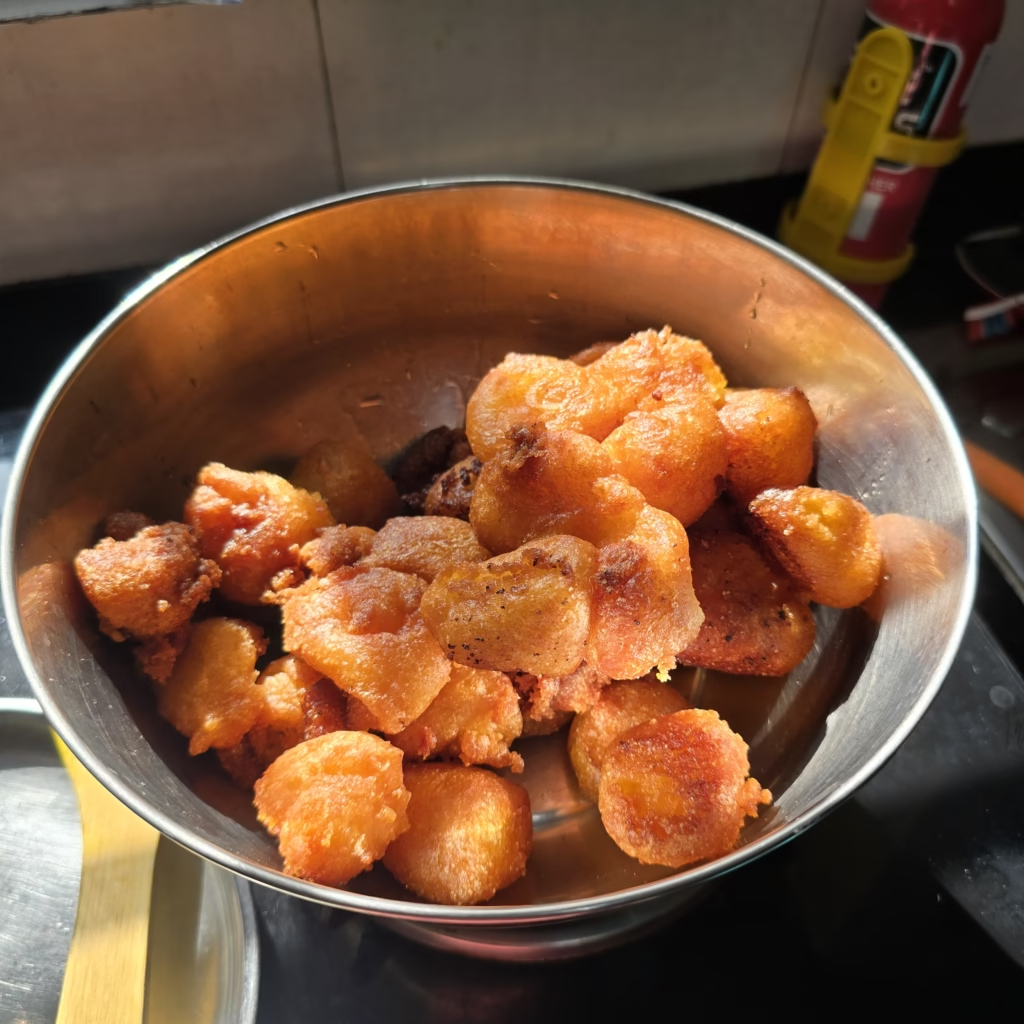
Sounds like quite a chore- which is perhaps why we find this amongst one of the endangered species of simple traditional home cooked treats. I don’t know who amongst the next generation of nephews or nieces will actually make this later in life. But imagine the little kids who waited eagerly while the boras were being fried. You need to cool it a bit before you can get the real crispy crunch.
All I know is that the story and the memory is perhaps stronger than the actual food itself. I’m trying to tie it all up with a little thread much like the thread of a Rakhi or friendship band. Hope this makes a few smile and the bora is sweeter and less bitter for you whenever you have a bite next time in life.
Footnote
Taal er Bora
Print This
Ingredients
- Taal- 1 whole fruit (preferably with 3 seeds)
- Maida (all purpose flour)- 2 cups approx
- Suji (Semolina)- 1/2 cup
- Grated coconut- 1/2 cup
- Sugar- 1 cup
- Oil for frying
- Water for extracting pulp
Instructions
- To prepare the taal, take out the hard brown outer cover. Once the fibrous orangish yellow fruit is exposed, divide it into the sections as per the seeds inside. Soak this in a bit of water (approx 1/2 cup) for 5-10 mins to soften the pulp
- Take a metallic wire mesh strainer and rub the fruit against the mesh to slowly extract the pulp. This will take a bit of time
- Extract and collect the pulp in a mixing bowl, clean up and discard the rest of the fibres and seeds. These collect a lot of flies and ants
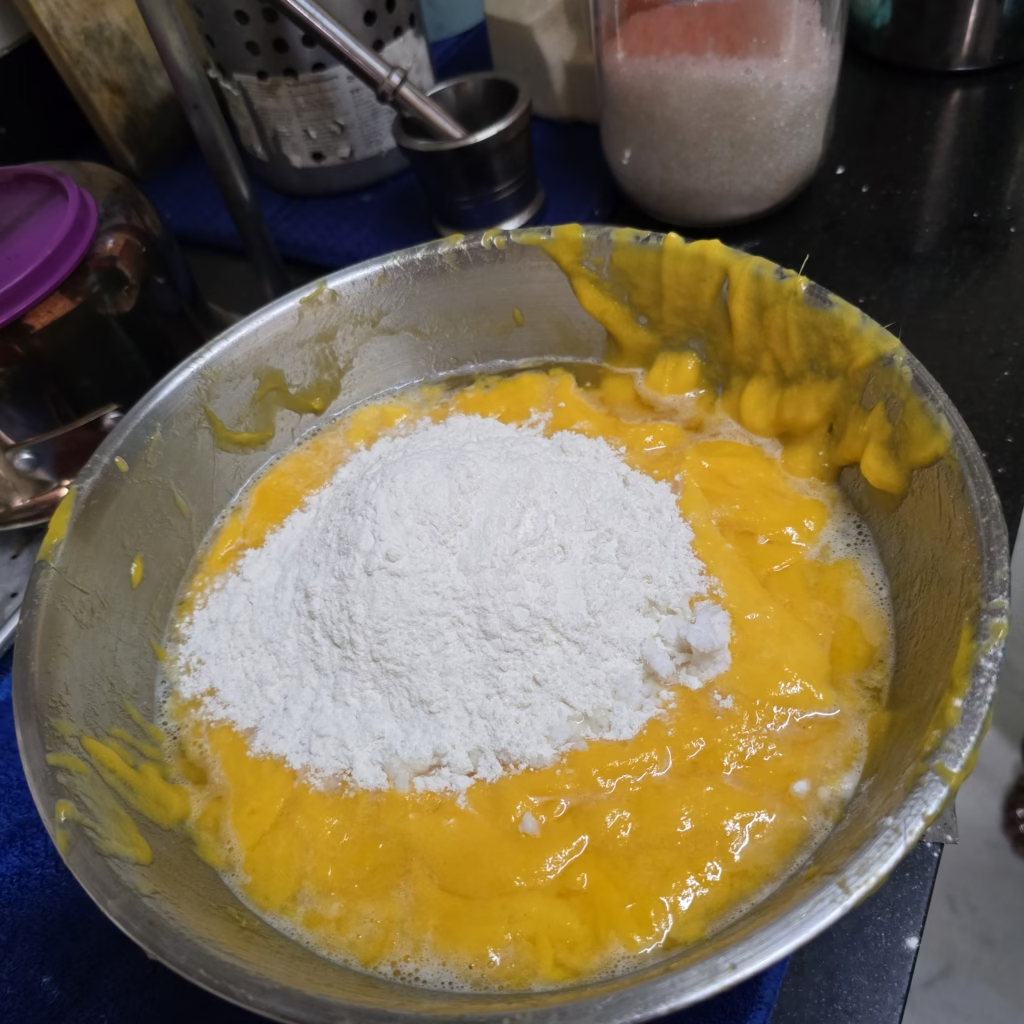
- Add the grated coconut, maida, suji and sugar bit by bit, mixing this into a thick dough. Make sure there are no lumps and the consistency is suitable for forming little dumplings.
- Let this dough rest for 15mins. This helps the suji (semolina) to soften and absorb the moisture. Check for the sugar and the thickness. Adjust if required
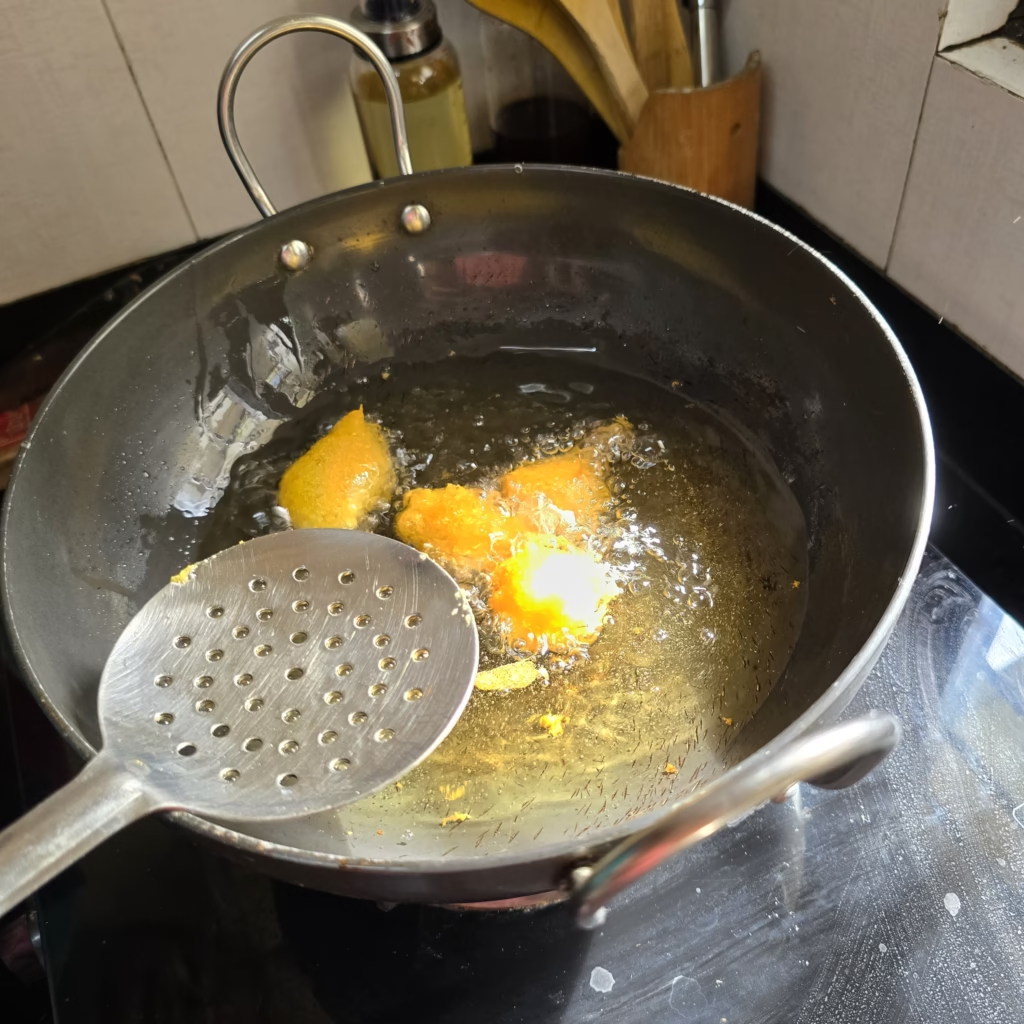
- Heat white oil in a kadahi or wok on high first. Test a little bit of the dough to check if it is rising up. Then form little balls and fry them in small batches
- Once one side is fried, turn over to the other side using a slotted perforated spoon (we call it jhanjhri). Fry on low heat now for approx 5mins for each batch
- Take out the boras after draining out the oil and let it rest for sometime. It will become crunchier. Serve after cooling
Notes
1. Rice flour can be added instead of suji or semolina in this recipe 2. Quantities are approximate - it depends on the size of the fruit, the quantity of pulp extracted and the moisture level. This particular fruit yielded almost 2lt of pulp
